
Case study · Online exam prep
Achievable grew organic traffic 73x — and kept growing through the AI shift
Six years of SEO took a B2C exam prep company from ~700 organic sessions a month to over 51,000 — and grew 67% in the year AI answers cut traffic elsewhere.
- Web design
- Web development
- SEO
- Google Ads
- 73x
- Organic traffic
- +67%
- Growth, last 12 months
- 3,203
- Keywords in top 3
- 6 yrs
- Engagement, ongoing
Inside the Achievable site
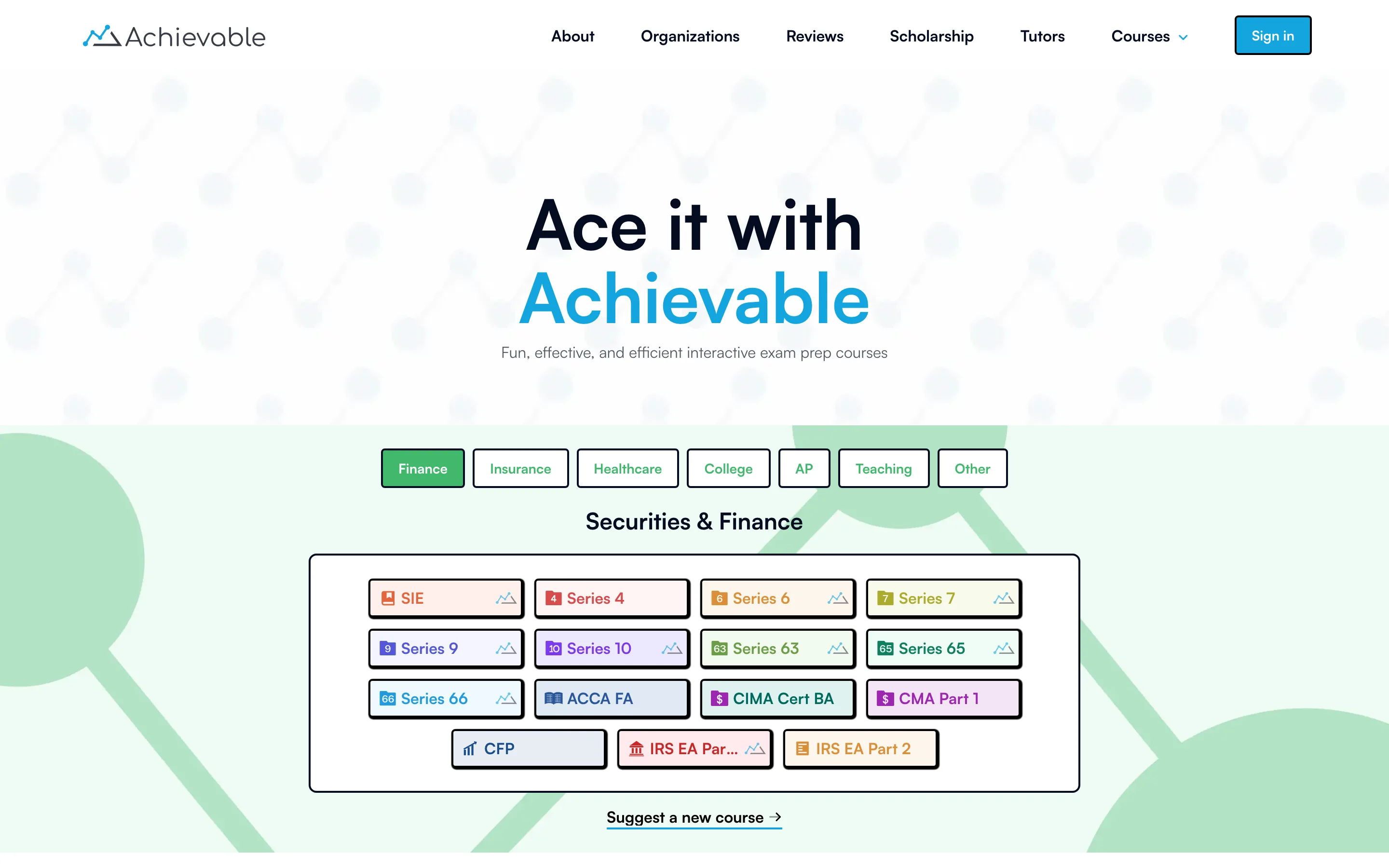
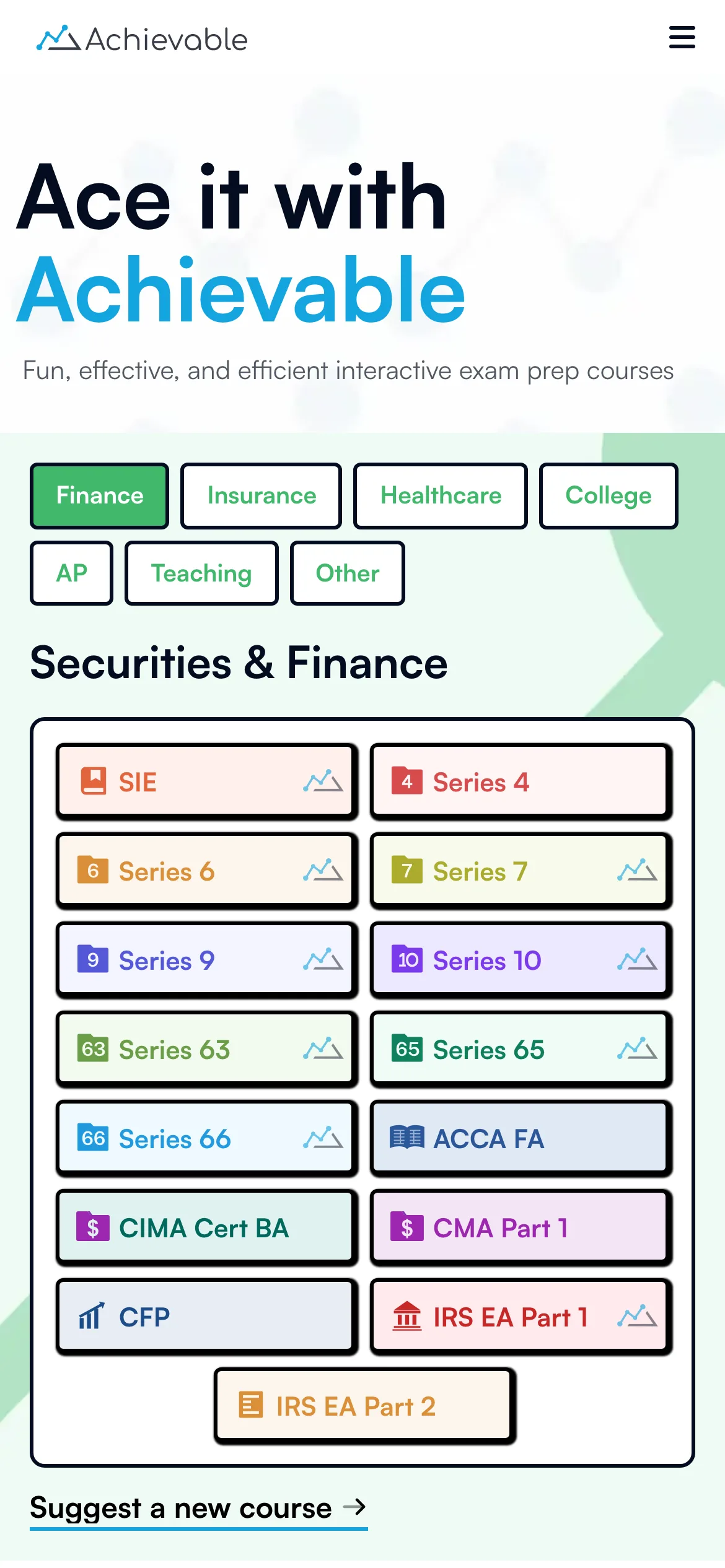
- Course pages for licensing, certification, college admissions and AP exams
- A free practice-exam library and an AP score calculator
- A college admissions data hub and a glossary of exam terms
- Structured data on every page, and markdown versions of key pages for AI agents
- A sitemap of about 4,800 URLs, each with an accurate last-modified date
Disclosure: Two PressRoom principals also work at Achievable: Justin Pincar as its CTO, and Tyler York as its co-founder and CEO.
Where they started
Achievable sells exam preparation to consumers — FINRA securities licensing, GRE, AP subjects, pharmacy technician certification, strength and conditioning. In 2020 the product was good and search was not working for it. Organic traffic averaged 702 sessions a month across the year, worth about $936 a month in equivalent paid traffic. The company's most valuable asset — a complete online textbook for every exam it taught — was locked behind the application, invisible to search engines.
That was the whole opportunity, and it took a while to see it. Achievable had already written more high-quality, expert-authored material on securities licensing and graduate admissions than almost anyone else on the internet. None of it could rank, because none of it could be crawled.
What we did
Three engines, built in sequence rather than in parallel. Each one had to prove itself before the next was funded.
The textbook became the website. We restructured Achievable's in-app learning content so that every chapter of every course became a publicly indexable page, with its own URL, its own internal linking, and its own place in a topical hierarchy. This is the piece of the strategy that mattered most and the one most competitors still have not copied.
It works because the content was already excellent and already granular. A single GRE geometry chapter on special right triangles now draws 3,735 organic sessions a month on 315 distinct keywords, ranking third for "30 60 90 triangle rules." A pharmacy technician chapter on sig codes draws over a thousand sessions a month on 188 keywords. These are not pages anyone wrote for SEO. They are lessons that already existed, made findable.
Free tools and practice exams as acquisition surfaces. Free practice exams for each certification, and score calculators for the AP subjects, gave people a reason to arrive before they were ready to buy. The Series 7 practice exam alone runs about 1,500 sessions a month; the AP score calculators together add several hundred more. These pages convert at the top of the funnel and feed the paid product.
Technical and conversion work underneath both. Crawl and indexation architecture for tens of thousands of generated pages, internal linking that distributes authority rather than trapping it, and a mobile checkout rebuild that let the traffic actually turn into revenue. Traffic that arrives on a page nobody can buy from is a vanity metric.
How it got implemented
Recommendations moved into production because we scoped them as engineering work and stayed accountable for them through release. Specifications, acceptance criteria, review of the implementation, and validation after it shipped.
Implementation moved unusually fast on this engagement, because we worked inside Achievable's engineering team. Most clients ship through a separate web team or an external agency, which adds weeks and needs far more coordination. The strategy transfers to those situations. The pace does not, automatically.
Results
Against the 2020 baseline:
| 2020 average | Aug 2025 – Jul 2026 | Change | |
|---|---|---|---|
| Organic sessions / month | 702 | 51,165 | 73x |
| Organic traffic value / month | $936 | $35,761 | 38x |
And year over year, on the same trailing-average method:
| Aug 2024 – Jul 2025 | Aug 2025 – Jul 2026 | Change | |
|---|---|---|---|
| Organic sessions / month | 30,583 | 51,165 | +67% |
Today the site ranks for 10,663 keywords, of which 3,203 sit in the top three positions, on a Domain Rating of 56 and 3,942 referring domains. The most recent reliable month on record, July 2026, ran 48,261 sessions.
The engagement started in 2020 and is still running. Six years is the number we would point at first. Nothing renews an SEO retainer for six consecutive years except results the client can see in their own revenue.
The part that matters right now
Between August 2025 and July 2026, AI Overviews and AI-generated answers absorbed a large share of informational search. Sites that depended on long-tail informational queries lost traffic even where their rankings held — positions unchanged, keyword coverage collapsing, clicks disappearing. We have measured declines of 20% to 70% on destination and publisher sites over exactly this window.
Achievable grew 67% in the same twelve months.
The reason is structural rather than clever. Content that answers a question completely in one paragraph gets summarised and replaced. Content attached to a product someone has to log into, practise with, and be scored by does not — the answer is not the destination, the tool is. Achievable's search surface is built on chapters that lead into an adaptive learning engine and practice exams that lead into a paid product. An AI answer can summarise the concept. It cannot sit the exam for you.
That distinction is the whole of our current advice to clients, and this engagement is where we learned it.
What we would tell you before you use this
- All figures are Ahrefs estimates, not measured analytics. We use them because you can independently verify every one; they will not match the client's internal numbers exactly.
- One anomalous month. May 2026 records 97,110 sessions, roughly double the surrounding months, and we believe it is an index artifact rather than real demand. We have used trailing twelve-month averages throughout rather than quoting that peak, which would have made every number in this case study look better and been misleading.
- The comparison periods are annual averages, not cherry-picked months, for the same reason.
- We exclude the final month of any data range. Ahrefs returns an unreliable figure for the last month of a query window — the same month can differ by a factor of two depending on where the range ends. Every figure here ends at July 2026 rather than August.
- B2C exam preparation is not your industry unless it is. What transfers is the method — finding content you already own that search cannot reach, making it reachable at scale, and attaching it to something an AI answer cannot substitute for. The vertical does not transfer.
Top to bottom
Scroll inside the window to see the whole page, as it looks on desktop today.
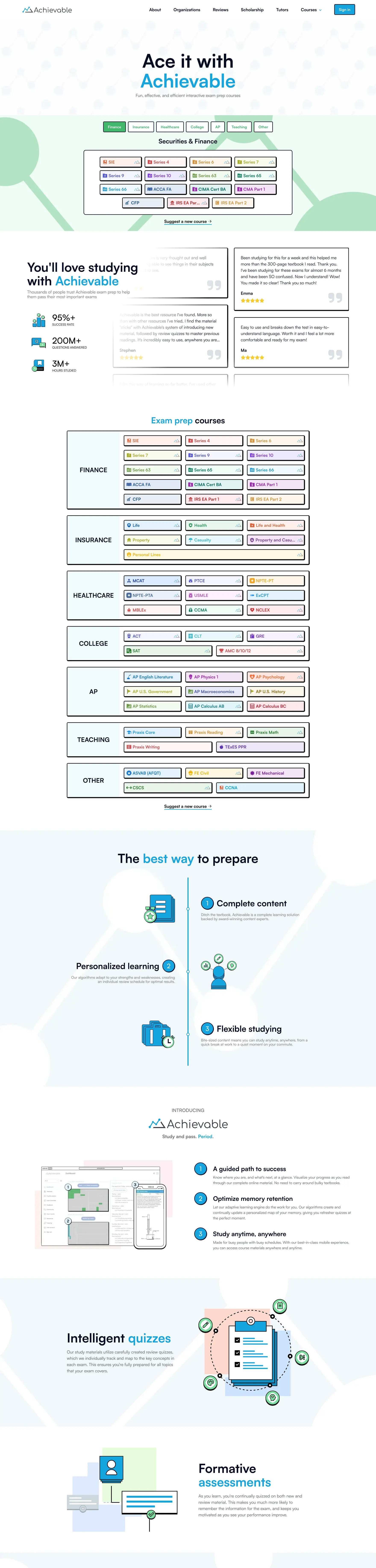
Palette and type

Typefaces
- Satoshi
Picton blue
#15A5DF
Emerald
#40B86C
Midnight
#030C20
Slate
#393D48
More of our work


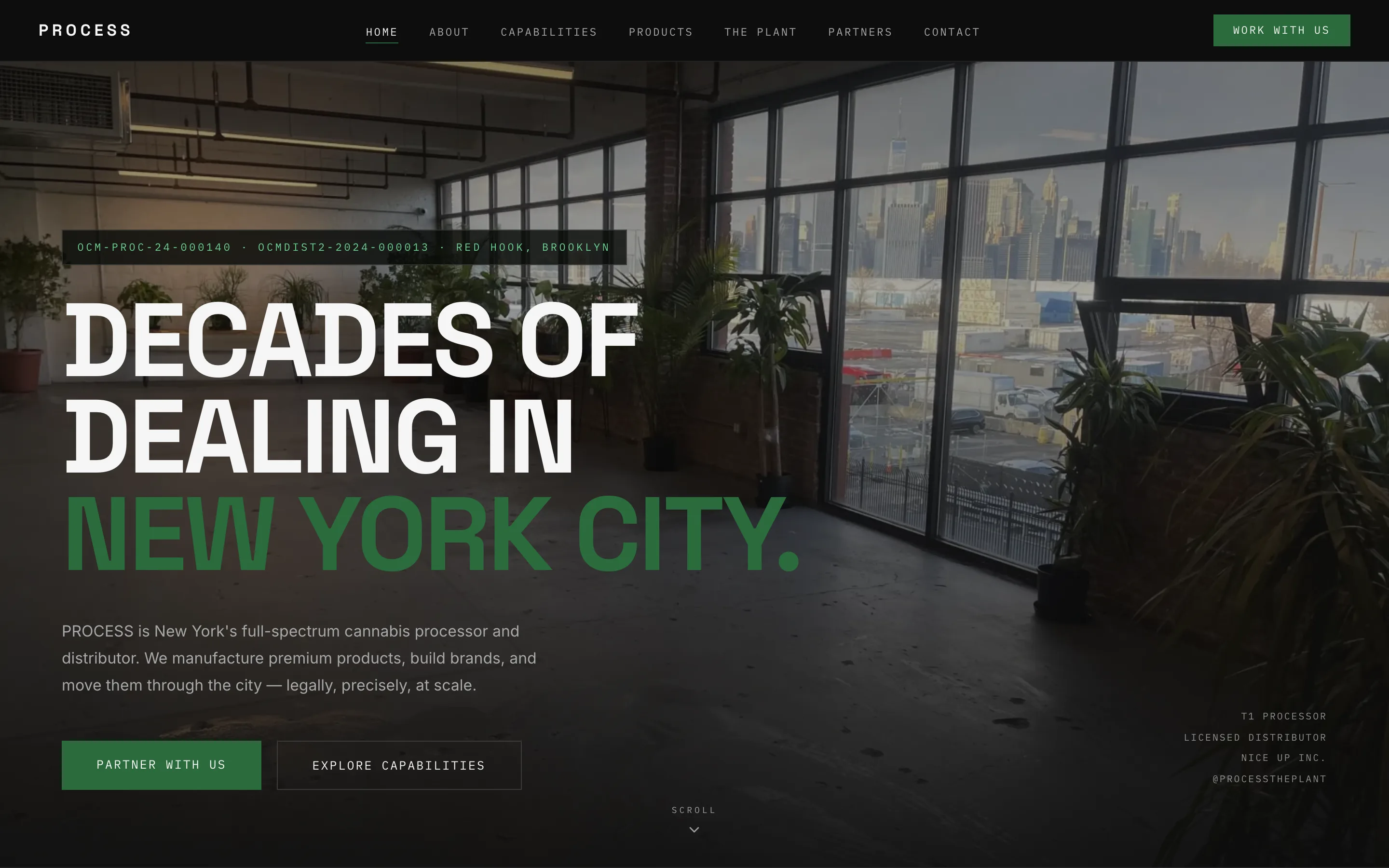
Planning a new website?
We design and build fast, search-ready websites, then help them rank. Tell us about your project, and we'll start with a free analysis of your current site, your search visibility, and your ads.