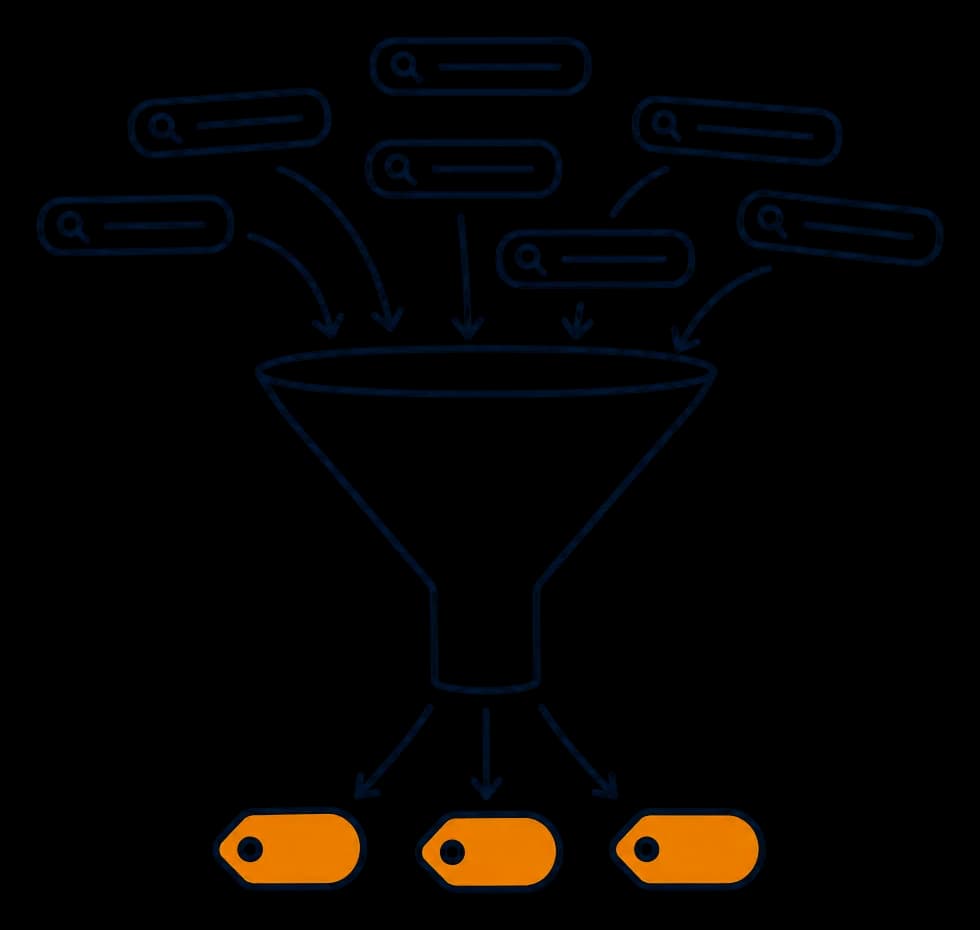

You need an SEO audit because you cannot fix what you cannot see. An audit is a structured review of your website's performance in search engines, and it ends in a ranked list of problems and opportunities, so you spend your time on the changes that matter instead of guessing.
Last updated October 28, 2026.
Why do you need an SEO audit?
Search rankings fail quietly. A page can fall out of the index, a redesign can break your redirects, or a competitor can start answering your customers' questions better, and nothing in your sales numbers shows it until months later. An audit is how you find out.
The common reasons to run one:
- Traffic has stalled or dropped and you do not know why.
- You are about to redesign, migrate or change platforms.
- You have never had one, or the last one is more than a year old.
- You are hiring an agency or taking over a site and want a clear starting point.
- You publish content but few pages rank.
What does an SEO audit cover?
A good audit looks at four areas. Each answers a different question.
| Area | The question it answers | Typical checks |
|---|---|---|
| Technical | Can search engines crawl and index the site? | Status codes, redirects, sitemap, robots rules, canonical tags, page speed, mobile rendering, structured data |
| Content | Is each page worth ranking? | Thin or duplicate pages, outdated posts, titles and descriptions, headings, internal links |
| Keywords | Do the pages match what people search for? | Search intent, ranking terms, gaps against competitors, pages competing for the same query |
| Experience | Do visitors do what you want once they arrive? | Navigation, layout, calls to action, forms, usability on a phone |
Technical audit
The technical review makes sure search engines can reach your pages and understand them. It finds broken links, redirect chains, pages blocked from crawling, missing canonical tags, a missing or stale sitemap, slow pages and broken structured data. Technical problems are often the cheapest to fix and the most damaging to leave.
Content audit
A content audit reviews every page you have and decides whether to keep it, improve it, merge it or remove it. It flags pages that are thin, repeat each other or have gone out of date, and it checks that titles, descriptions and headings say what the page is about.
Keyword audit
A keyword audit compares what your pages target with what people actually type. It shows which terms you already rank for, which you could win with a better page, and where two of your own pages compete for the same query.
User experience audit
Rankings only matter if visitors act. A UX review looks at navigation, page layout, calls to action and how the site works on a phone, because a page that ranks but does not convert has not helped you.
How often should you run an SEO audit?
Run a full audit at least once a year, and again before a redesign, a platform change or a large content push. Between full audits, watch the basics every month in Google Search Console: pages that are not indexed, sudden drops in clicks, and errors Google reports. Sites that publish often, or sell in a fast-moving market, benefit from a lighter quarterly check.
How much does an SEO audit cost?
The price depends on the size of the site and the depth of the review. A comprehensive audit from an agency is typically a few thousand dollars, and a small site with a narrow scope costs less. Be wary of a very cheap or free audit that is only an automated report: those list issues without telling you which ones matter or what to do first. Ask what you receive at the end. A useful audit gives you a prioritized action list, not just a score.
Can you do an SEO audit yourself?
Yes, for a small site, and it is worth doing as a first pass.
- Open Google Search Console and read the Pages report to see what is indexed and what is not.
- Check the Performance report for the queries and pages that already bring impressions.
- Crawl the site with a tool such as Screaming Frog, Ahrefs or Semrush and read the errors it reports.
- Check each important page for a clear title, description, heading and internal links.
- Test the pages on a phone.
The hard part is not collecting the data. It is deciding which findings matter, in what order, and what to do about them. That takes experience, and it is where an agency earns its fee.
DIY audit or an agency?
Do it yourself if your site is small, your budget is tight and you have time to learn the tools. Bring in a team when the site is large, when you are about to migrate, when traffic has fallen and the cause is not obvious, or when you want the fixes made rather than only listed.
What happens after the audit?
The audit is the start, not the result. Its value is in the fixes: the technical errors repaired, the weak pages rewritten, the missing pages built. A good audit ends with a plan you can act on in order.
If you would like a team to run the audit and make the fixes, see our SEO audit services, or get in touch and tell us about your site.